Mapping Precisely the Urban Vegetation with Pléiades Neo

In 2022, Airbus Defence & Space Intelligence launched the Pléiades Neo Challenge, a call for projects offering free access to Pléiades Neo imagery (archive & tasking).

The CEREMA was selected for testing and implementing Pléiades Neo imagery on its “Green Urban Sat” project, which addresses an impactful description and evaluation of vegetation, helping municipalities to make decisions for the future.

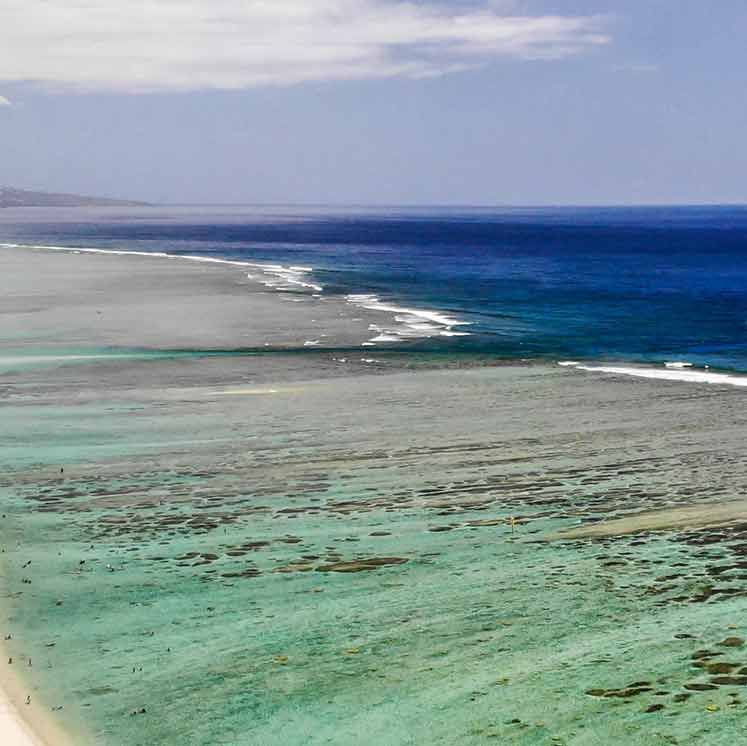
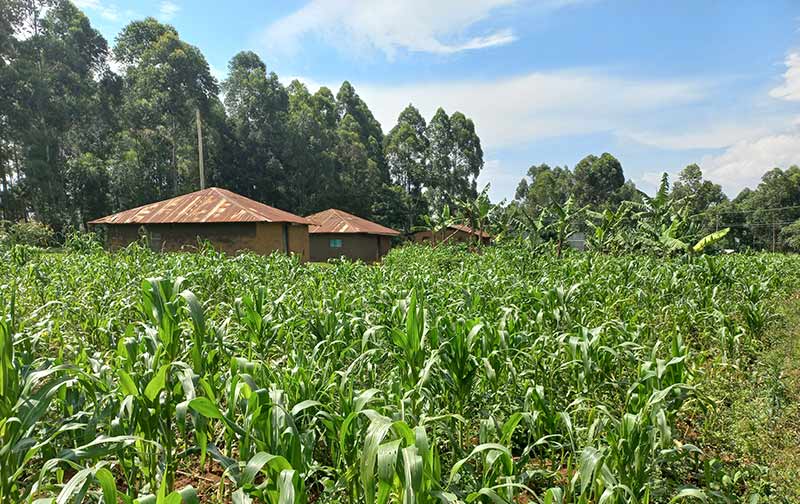
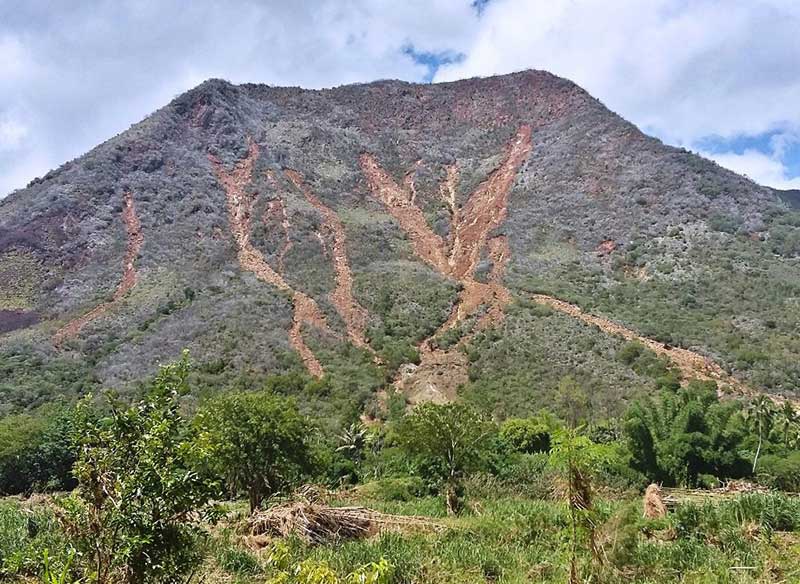
A total of 17 use cases have been completed in various fields including coastal monitoring, cliff erosion, city vegetation mapping, archaeology and more.

Cities are increasingly suffering from urban heat islands, pollution, runoff, and other issues. Urban vegetation offers several Ecosystem Services (ES) to cope with many of these challenges, including local climate regulation, improved air quality, water cycle management, socio-cultural benefits and ecological continuity.

Municipalities face a critical challenge: precisely mapping urban vegetation and its characteristics.

The challenge for CEREMA is to implement Pléiades Neo imagery in their 2-year project, Green Urban Sat, funded by the Space Climate Observatory (CNES). The project aims to develop a method for mapping urban vegetation using satellite imagery and the precise detection of vertical and horizontal strata.
The city of Nancy, France, has been used as a testing ground for this method.

Caption: The study area covers the municipality of Nancy, France.
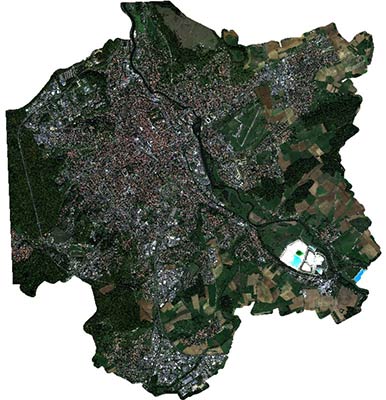
The study area covers the municipality of Nancy, France.
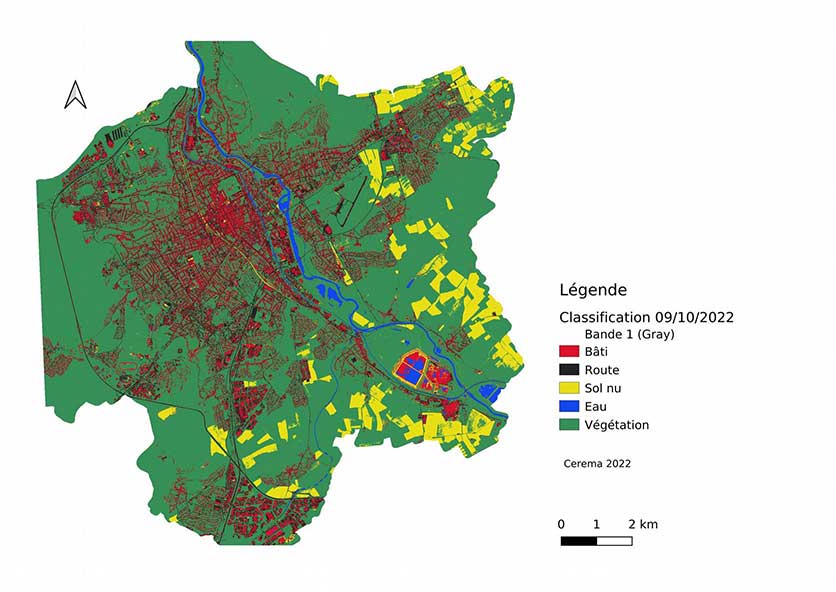
In this case, the CEREMA is using two different satellites images: Pléiades and Pléiades Neo.

  • Pléiades imagery: includes multi-temporal and multi-angular acquisitions to discriminate vegetation across seasons, discriminate vertical strata and discriminate horizontal shapes
  • Pléiades Neo tri-stereoscopic imagery: to detect vegetation with NDVI and supervised classification, using the advantages of the specific Red Edge-band.

The satellite imagery helps to identify different areas: built up areas, road, bare soil, water and vegetation.

Classification applied on Pléiades Neo 6-bands imagery

This analysis has confirmed the strong potential of the new Pléiades Neo images for satellite-based urban space analysis, particularly for vegetation in the city, thanks to their very high spatial resolution and their 6 spectral bands.
Pléiades Neo imagery offers several advantages for this application:

  • Precise identification of plan forms, including the detection of smaller plant structures like shrubs.
  • The Red Edge band enables the monitoring of the phenological cycle and water stress of plants. •
  • The very high-resolution of Pléiades Neo imagery allows for distinguishing between tree and herbaceous vegetation, with a high level of details on grass and, consequently, an heterogeneous texture.

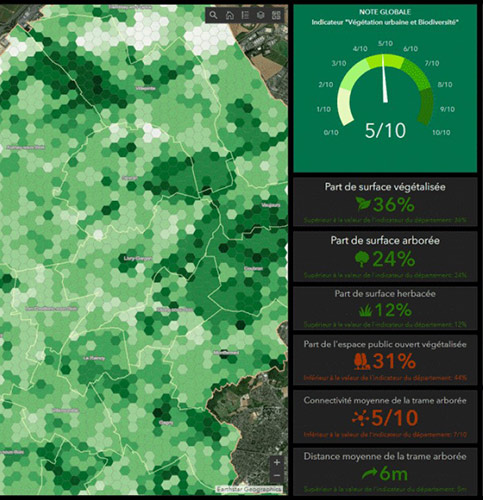
The CEREMA concluded that the city of Nancy can be rated at 5/10 for its urban vegetation and biodiversity indicator. The demonstration over Nancy will be included in the GreenCity platform (TerraNIS). Also, the method will be replicable at the national and global scale.

Caption: Extract from GreenCity platform (TerraNIS) with Nancy results

Extract from GreenCity platform (TerraNIS) with Nancy results

CEREMA (Centre for Studies and Expertise on Risks, the Environment, Mobility and Urban Planning) is the major French public agency for developing public expertise in the fields of urban planning, ecological and energy transition.

Read their report on the use of Pléiades Neo imagery


CEREMA logo

See our products in action

Do you have a similar project you would like to realise?